In 2018, the Biodegradable Products Institute (BPI) took a decisive step to protect the integrity of compost and the trust behind its certification mark: a phased ban on PFAS in BPI-certified products.
This decision followed growing concern from municipalities, composters, and regulators about fluorinated chemicals—commonly referred to as PFAS (per- and polyfluoroalkyl substances)—in foodservice packaging. Often called “forever chemicals,” PFAS are persistent in the environment and have been associated with contamination of soil and groundwater near farms and composting facilities. The U.S. Environmental Protection Agency (EPA) provides an overview of PFAS and their environmental and health impacts here.
Beginning in 2016, BPI heard directly from municipalities and states raising concerns about PFAS in compostable foodservice products. Specifically, stakeholders were worried about:
As the leading third-party certifier of compostable products in North America, BPI recognized that certification must evolve alongside emerging science and regulatory realities. While compostability, regulated heavy metals, and ecotoxicity testing were already required for BPI Certification, products also needed to ensure they would not compromise compost quality by potentially introducing PFAS.
To better understand the issue, BPI hired a technical advisor in 2017 to assess the science and regulatory landscape. Based on that work, the Board proposed a member vote to restrict and eventually prohibit intentionally added fluorinated chemicals from BPI certification.
In late 2017, BPI brought forward a proposal to its membership:
The membership voted in favor of the proposal.
This vote underscored an important principle: BPI’s certification program is standards-driven and member-informed. The PFAS restriction was not an abrupt policy shift—it was a transparent, collaborative process grounded in science, technical review and member engagement.
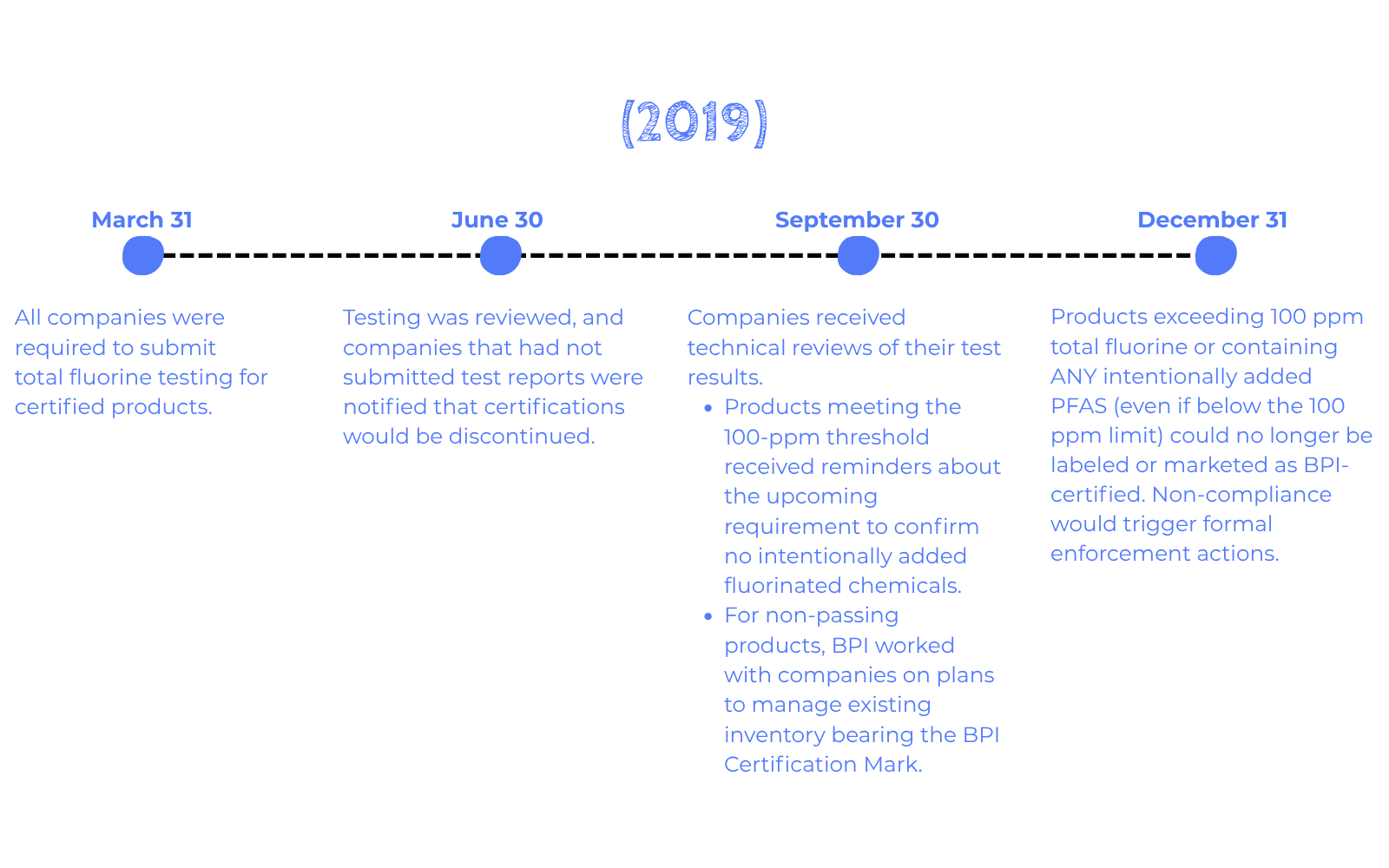
BPI implemented a clear, phased timeline to allow producers to test and reformulate products where needed to comply with the changes:
1. Early engagement matters.
By listening to municipalities and composters early, BPI was able to act proactively rather than reactively.
2. Science and standards must evolve together.
Aligning with the EN 13432 total fluorine threshold provided a recognized benchmark while signaling stronger expectations for material safety.
3. Transparency builds trust.
Clear milestones, direct communication with members, and defined enforcement mechanisms helped maintain program integrity during a complex transition.
4. Compost quality is foundational.
The compostability movement depends on the confidence of composters, regulators, and end users. Safeguarding compost quality ultimately protects the entire value chain.
BPI’s PFAS restriction reinforced that compostable certification is not static. As knowledge advances and regulatory expectations shift, standards must evolve to ensure compostable products truly support soil health and organics diversion.
By taking a phased, member-driven approach, BPI demonstrated that environmental leadership means not only meeting existing standards—but strengthening them when needed.
Learn more about what goes into BPI Certification and testing procedures/requirements.


