Science, Standards, and the Facts That Matter
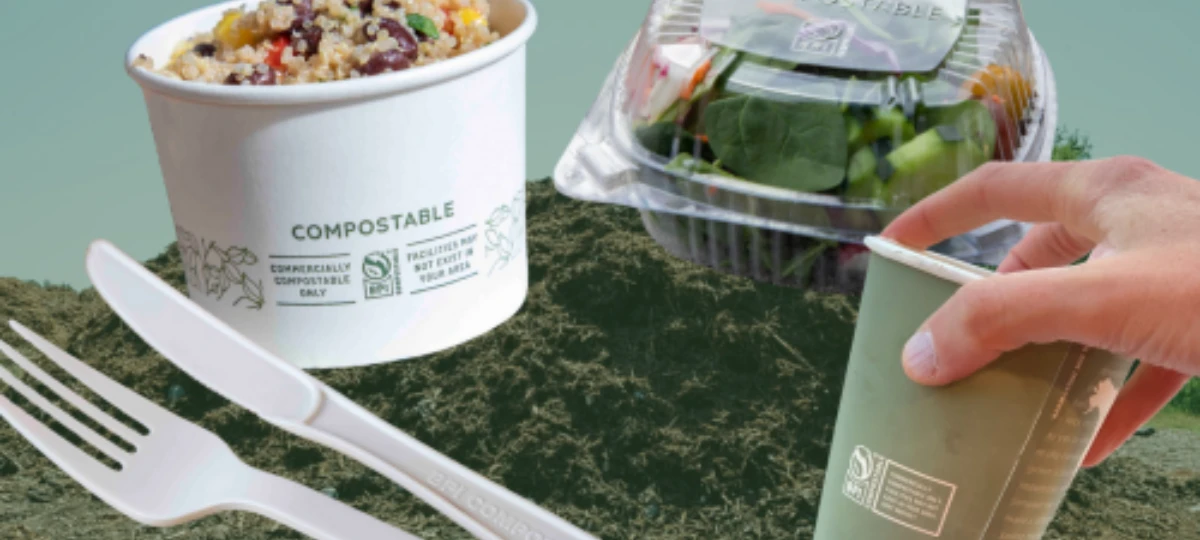
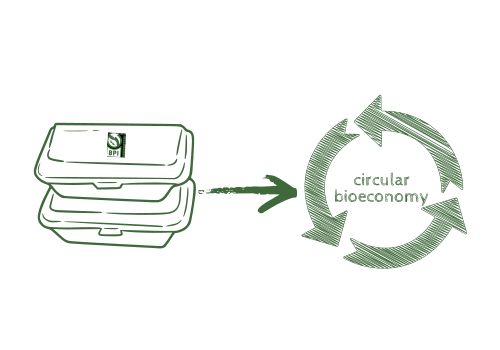
As communities, companies, and consumers rethink how we manage waste, certified compostable products are proving to be powerful tools—working hand-in-hand with reusables and recyclables to move us closer to a circular bioeconomy.
These products aren’t just “greener” versions of plastic—they’re science-backed, rigorously tested alternatives designed to perform in real composting systems. Certified compostables make it easier to capture food scraps, reduce landfill waste, and create high-quality compost that benefits soil and climate alike.
Certified compostable products are third-party verified materials that break down safely in industrial composting environments. Unlike conventional plastics, which persist for centuries, these materials are engineered to disintegrate and biodegrade under controlled composting conditions—leaving behind nothing but nutrient-rich compost.
They undergo rigorous lab testing to confirm:
In short, certified compostables are tools for circularity—helping consumers and composters divert food waste from landfills, reduce methane emissions, and return valuable nutrients to the soil.
Certification ensures that compostable products actually perform as promised.
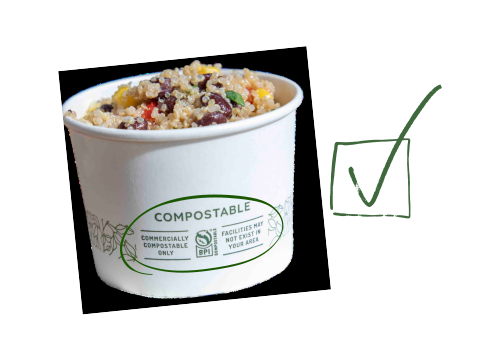
The BPI Certification Mark, for example, confirms that a product meets ASTM D6400 or D6868 standards and BPI’s eligibility criteria —stringent requirements to ensure a product’s compostability . Certified products are tested by accredited labs and reviewed by independent technical experts.
This process:
BPI’s Certification Mark gives composters confidence to accept these materials and helps consumers avoid greenwashing—where misleading “biodegradable” claims obscure the truth.
1. Environmental Impact
Certified compostables enable an increased opportunity for organics diversion—helping keep food scraps out of landfills, where they would otherwise generate methane. By turning waste into nutrient-rich compost, they contribute directly to climate change mitigation and soil regeneration.
2. Regulatory Alignment
They comply with growing state and local legislation requiring compostability standards such as ASTM D6400/D6868. Third-party certification through organizations like BPI ensures transparency and compliance.
3. Consumer Confidence and Demand
Certified compostables meet rising consumer expectations for safer, more sustainable products. They are free from intentionally added PFAS, avoid persistent microplastics, and carry standardized labels that make proper sorting easier for composters and households alike. Learn more about consumer data and sustainable products and packaging demand below:
There’s a lot of misinformation about compostable products. Here’s what the science and data really say.
Fact 1: “Biodegradable” ≠ “Compostable”
Explanation:
While everything that is compostable is technically biodegradable, the reverse isn’t true. The term “biodegradable” doesn’t define how or where breakdown happens—or how long it takes. Products labeled “biodegradable” are often lookalikes that contaminate compost systems because they aren’t designed for composting and they don’t disintegrate properly or safely. Certified compostables, by contrast, are tested for performance and safety in real composting conditions.
Fact 2: Compostables Do Break Down
Explanation:
Certified compostables are proven to disintegrate and biodegrade under ASTM D6400/D6868 standards, confirmed by test methods like ASTM D8618 and D8619. Multiple studies—including independent research from Closed Loop Partners—have shown that certified compostables perform as intended in active composting systems.
Fact 3: Compostables Don’t Cause Contamination
Explanation:
Contamination in compost piles comes from conventional non-compostable plastics and materials, not certified compostables. Products that carry trusted certification marks like BPI’s are designed with standardized labels and verified materials to support proper sorting. They’re made without toxic additives or conventional plastic blends that can persist in compost.
Fact 4: Recycled Plastic Isn’t Automatically Better
Explanation:
Recycling remains important, but recycled plastics still rely on fossil fuels and can shed microplastics. They also can’t handle food-soiled packaging effectively. Certified compostables—typically plant-based and non-toxic—offer a complementary, circular solution for organics and packaging that can’t be easily recycled.
Fact 5: Certified Compostables Don’t Leave Microplastics Behind
Explanation:
Certified compostable polymers like PLA are tested to fully disintegrate without generating microplastics. Independent validation, including research from the Holland Circular Plastics Initiative, confirms that properly composted PLA breaks down completely and safely under composting conditions.
Fact 6: Compostables Can Reduce Confusion
Explanation:
Properly labeled certified compostables actually make sorting easier. When packaging and food can both go in the same compost bin, it simplifies participation for consumers and reduces contamination for composters. Combined with clear labeling, policy alignment, and education, certified compostables are part of a systems-based approach that helps composting succeed.
Certified compostable products aren’t just an alternative to plastic—they’re a scientifically validated solution for diverting food waste, supporting compost quality, and advancing a circular bioeconomy.
By connecting rigorous science with real-world performance, BPI Certification ensures compostable products break down as intended—without leaving behind toxins, confusion, or false claims.
When you see the BPI Certification Mark, you can trust that product to perform, protect composters, and support a cleaner, healthier planet.
Science-backed. Transparent. Trusted.
Certified compostable products are helping close the loop on organics—one compost bin at a time.
Read more about how certified compostable products are contributing to a circular bioeconomy in the midst of infrastructure development here.
Learn more about BPI Certification in this YouTube course, "Inside BPI Certification":


