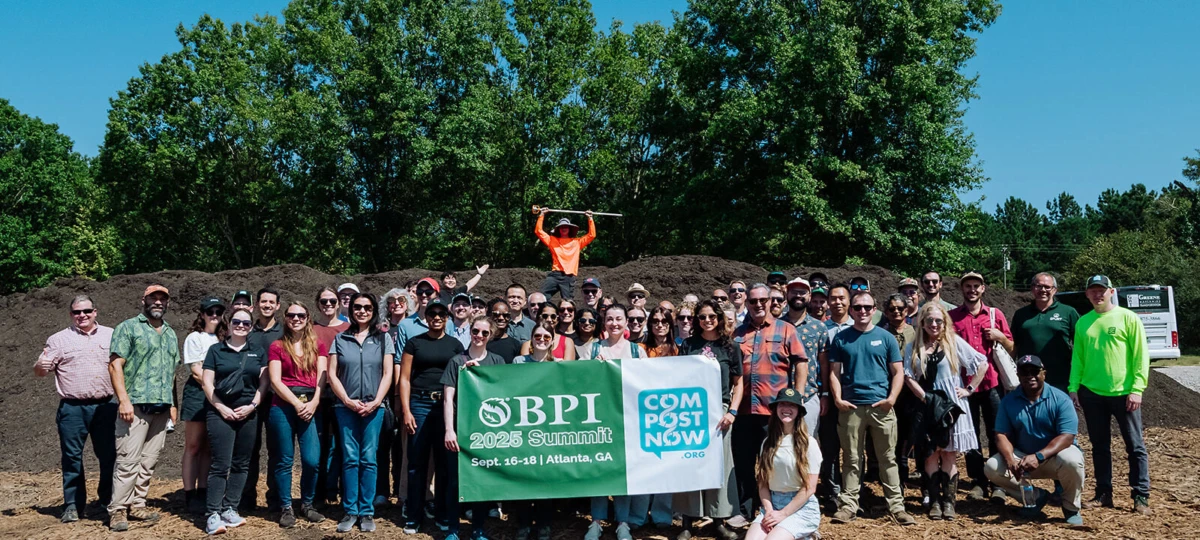
In 2023, BPI organized its inaugural Summit. In a crowded space of conferences, it took BPI 24 years to host its own event, but the movement around BPI’s mission had grown, and the event’s theme focused on the often-overlooked intersection of compostable products, food waste, and climate change. This first event was in Minneapolis, where the city’s composting program promotes the use of certified compostables, has close partnerships with composting facilities, and boasts <1% residential contamination rates.
At that first Summit, BPI announced that it had just filed a rulemaking petition with USDA to address the definition of compost in the National Organic Program, an effort that was supported at the time by groups like US Composting Council and California Compost Council. We welcomed Finian Makepeace, co-founder of Kiss The Ground as our keynote speaker, who talked about how BPI’s work is connected to soil health, climate change and a regenerative future.
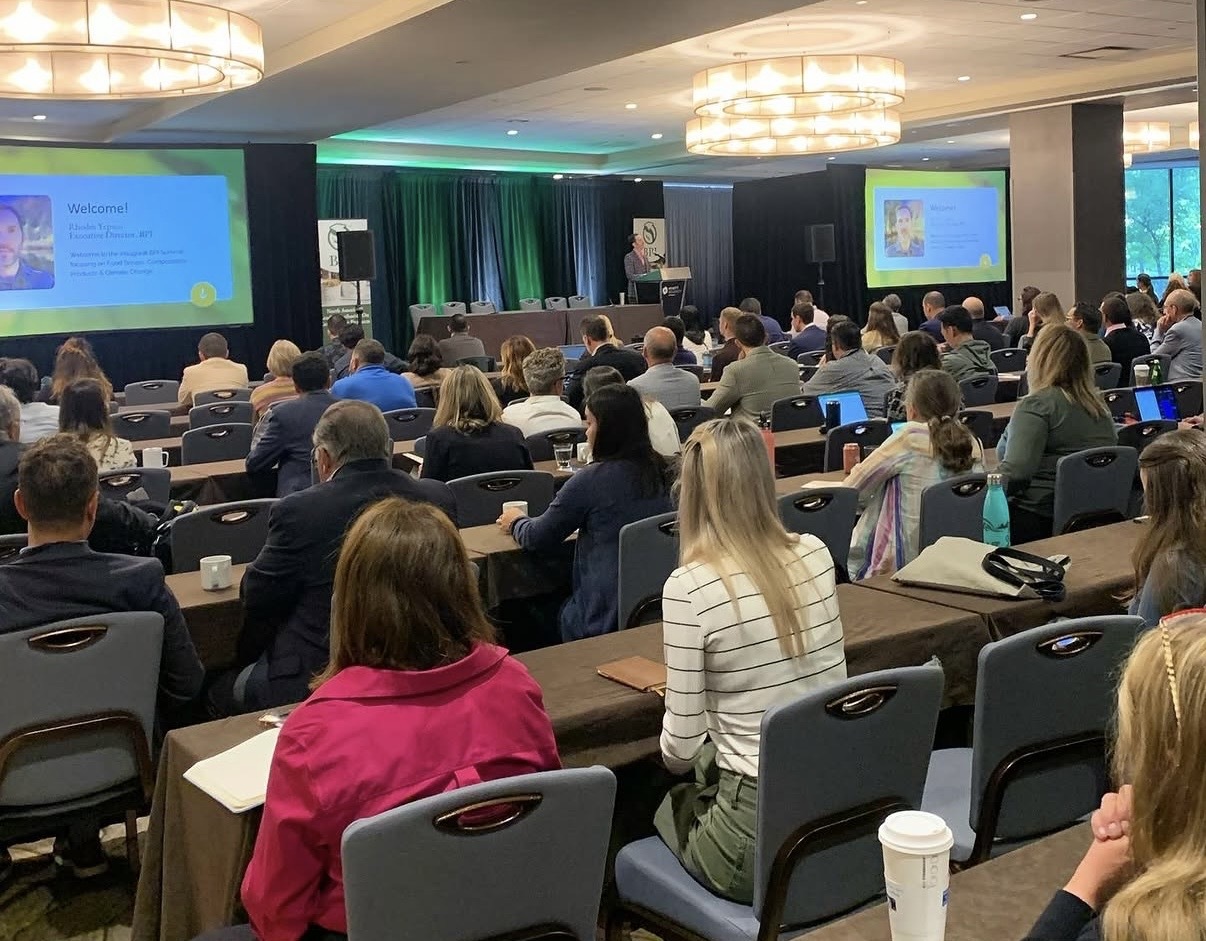
Discussions focused on what it takes to make composting systems that include compostable products work at scale, looking at the technical, practical, and real-world experience.
Brewing in the background was California’s landmark SB 54, signed into law in 2022, which BPI had successfully negotiated according to its Guiding Principles, including seats on the advisory board for a composter and a compostable product company, and establishing composability as a viable compliance pathway alongside recycling and reuse.
As discussions around SB regulations expanded in 2023 and 2024, large composters and waste industry players became increasingly concerned about compostable products being a compliance pathway, which led to USCC and CCC opposing BPI’s efforts at USDA, keeping compostable products as defined in California law from becoming compliant.
This change from support to opposition is what led us to Berkeley, California for the 2024 BPI Summit, with the theme of Aligning the Compostable Products Value Chain through Collaboration. Alignment didn’t mean everyone in the room agreed; it meant BPI recognized the need for convening stakeholders and having hard conversations.
In fact, some of the most valuable conversations came from people who didn’t see the challenges from the same perspective.
Composters discussed why some facilities were not yet accepting compostable packaging, while others shared experiences where compostables were working successfully in their operations. Speakers dug into contamination, collection models, policy conflicts, compost quality and end markets. Scientists explored biodegradation and microplastics, while manufacturers and material innovators discussed biopolymers and the technical challenges of developing materials that can perform as packaging and meet compostability requirements. At the 2024 Summit, BPI announced the launch of its composter and hauler microgrant program, and its new three-year strategic plan, including updated mission and vision statements.
The result was something BPI believes is essential to progress: a healthy, candid conversation among people who don't always agree — grounded in the realities of how composting systems actually operate.
The Berkeley discussions also made clear that compostability cannot be evaluated in isolation. The performance of a compostable product matters, but so does collection, sorting, processing conditions, labeling, contamination management and what happens to finished compost. The tour of Napa Recycling & Waste Services showcased a successful real-world example of a composting system in California that takes all those important aspects into consideration.
By the 2025 BPI Summit in Atlanta, Georgia, the conversation had evolved.
Just like keynote Ben Von Wong from the 2024 Summit suggested: Progress is not linear, but more importantly, it’s possible. The theme, Societal Transition to a Bioeconomy: Building Trust During Non-Linear Progress, reflected a growing focus on how the industry can move from individual pieces of progress toward functioning systems.
The technical conversation continued, covering the rapid increase in the use of depackaging equipment, biodegradation science and the difference between persistent and non-persistent microplastics, life cycle assessment, compost quality metrics, certification and the data needed to build trust. Speakers examined the business realities of scaling compost infrastructure, including capital, policy, end markets and public-private partnerships.
But Atlanta also gave attendees something inspiring: examples of circularity in action and at scale.
Tours of CompostNow and Mercedes-Benz Stadium provided an opportunity to see food waste diversion and sustainability programs operating outside the conference room. Case studies highlighted cities, businesses and other organizations putting composting and compostable products into practice.

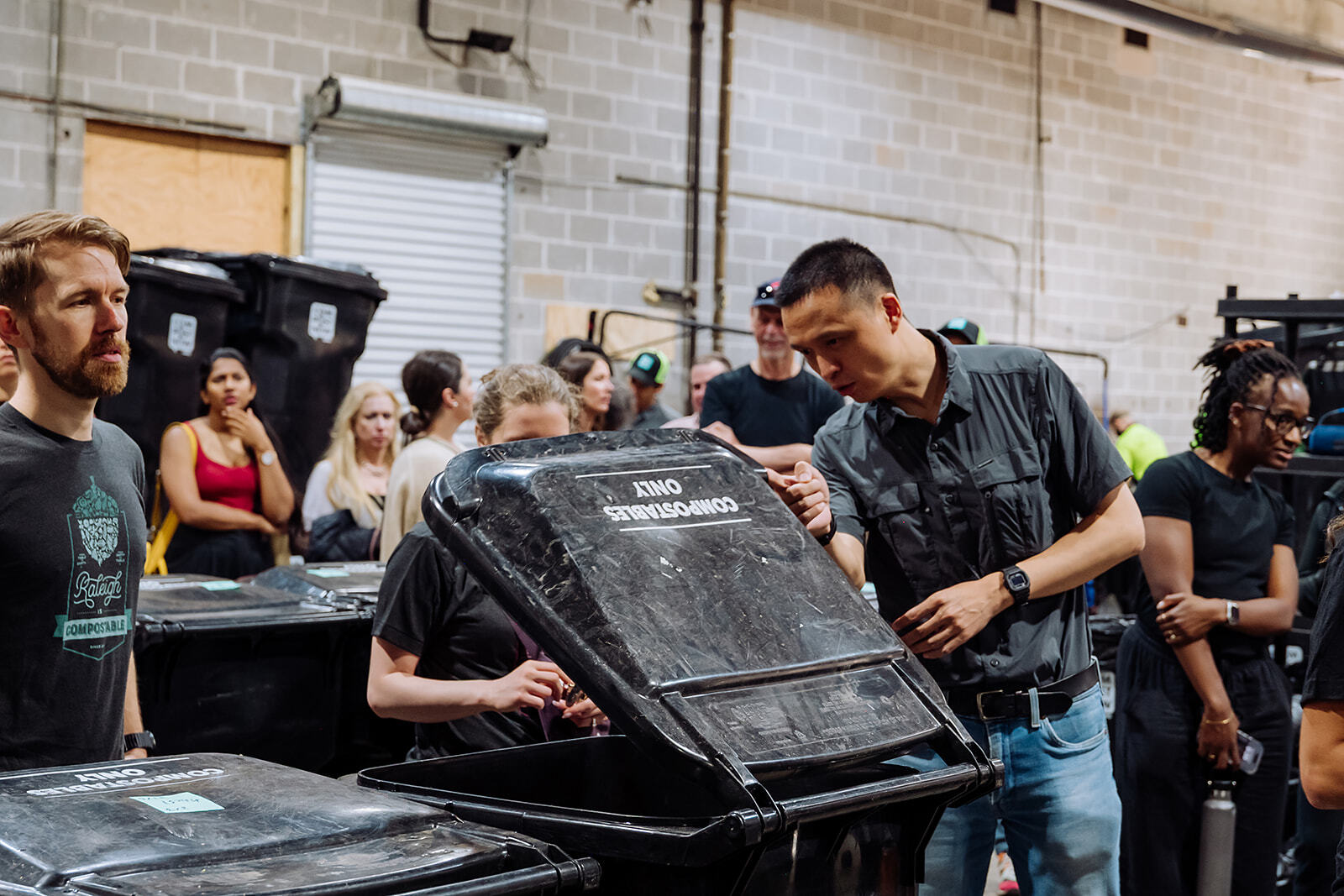
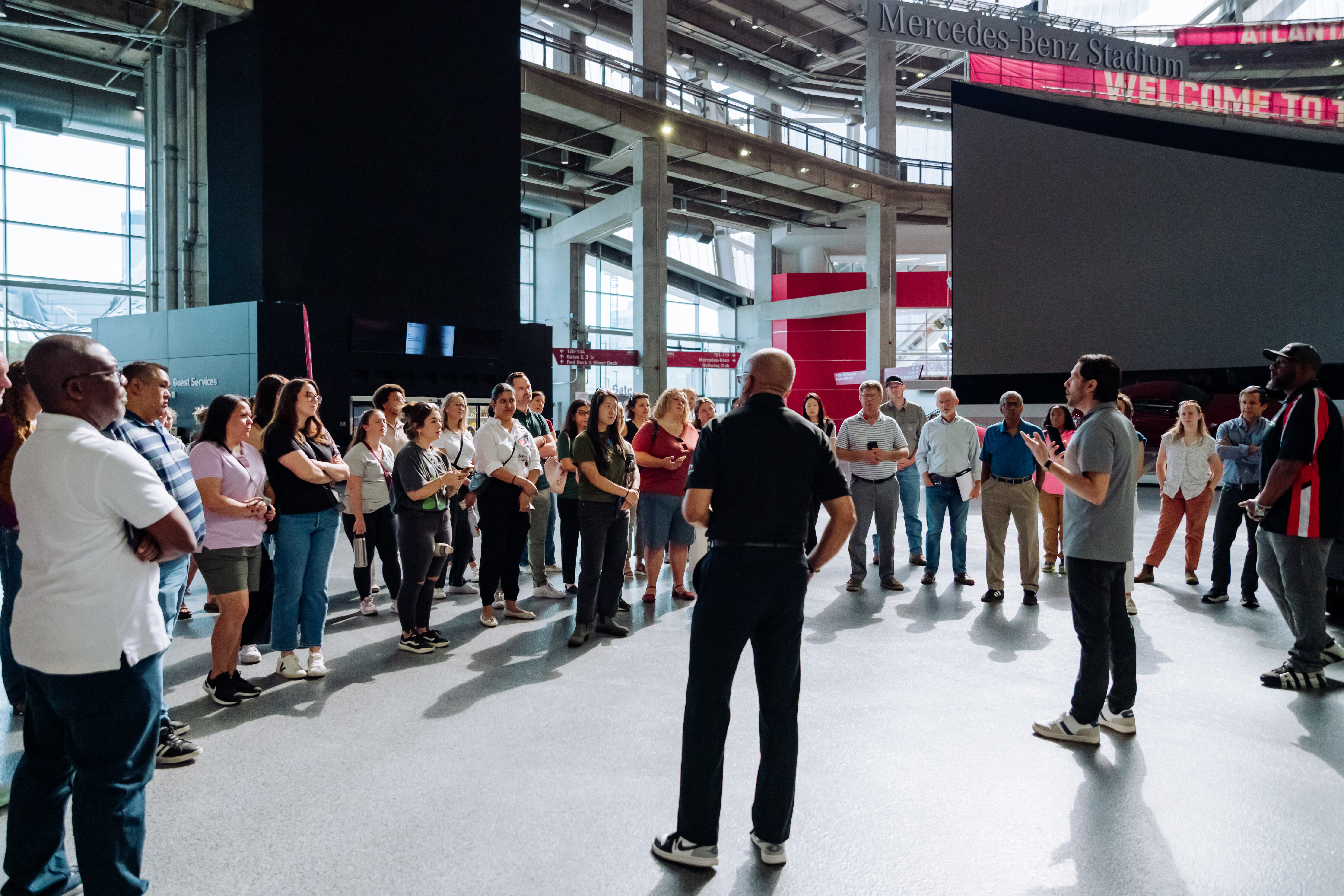
That combination—technical discussion alongside real-world examples—helped move the conversation from Can this work? toward What does it take to make it work?
Additionally, Atlanta was the setting for a major milestone for BPI and the compostable products industry: BPI unveiled its new Commercial & Home Compostable Certification program. The program expanded BPI’s science-based certification framework to products designed to break down in properly managed home composting environments, building on BPI’s existing commercial certification. The announcement represented years of work and a significant step in expanding the pathways through which certified compostable products can participate in organic waste diversion.
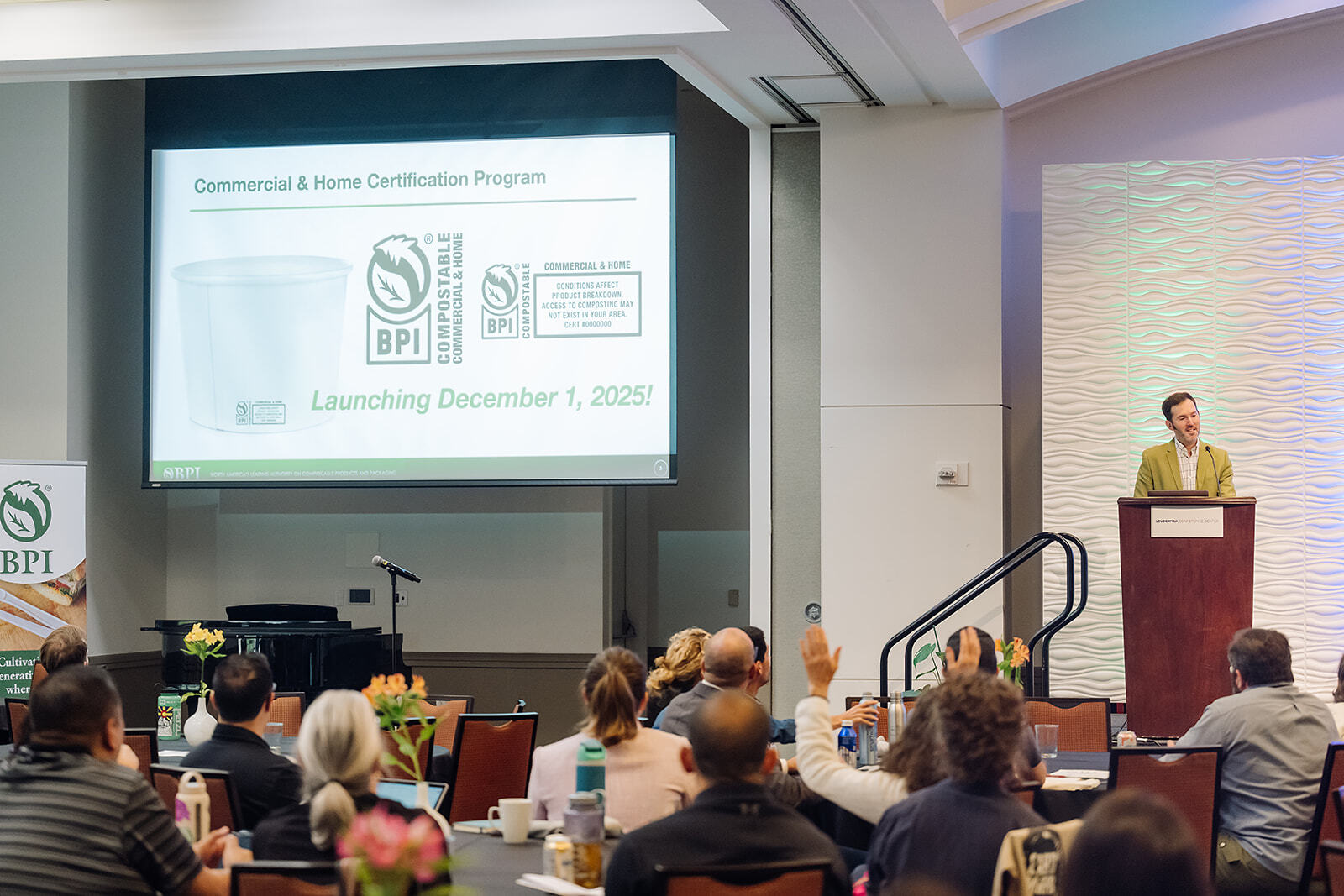
The 2025 Summit had hard hitting content, with Suzanne Shelton’s keynote on consumer data and perception of sustainable packaging, and Marco B. Bollinger’s keynote on the power of storytelling to provoke a movement, and why he decided to feature BPI and compostable products in his Hidden Heroes documentary work. Attendees left with a feeling of enduring hope—that despite systems of circularity involving ample collaboration and alignment, progress is undoubtedly possible and is already happening at a promising pace.
That brings us to Detroit, Michigan, October 14–15, 2026, for the BPI Summit.
This year’s theme, Right Recipe, Right People, takes the next step.
Successful composting systems don't depend on one technology, one material, one public policy, or one organization. They require the right combination of compostable products, collection and hauling businesses, processing infrastructure, interconnected policies on food waste and packaging, data, technology, compost markets — and the individuals who connect all of those pieces.
And this year, attendees won't just hear about or discuss those systems. They'll see them firsthand.
The 2026 Summit prioritizes experiential learning and relationship building, with three visits to Spurt Industries, Michigan State University and Hammond Farms. Attendees will have the opportunity to step into operational environments, explore technology and research, and see how different parts of the composting and organics ecosystem work in practice.
The focused half-day of traditional sessions will bring together industry leaders for a keynote and roundtables, an in-person BPI Member meeting, followed by an evening reception designed to keep the conversation going.
Because some lessons can't be captured on a screen. You have to see the equipment, understand the process, ask the hard questions, and talk directly with the people doing the work.
From Minneapolis to Berkeley to Atlanta to Detroit, the BPI Summit conversation has continued to evolve.
2023 was about the intersection of compostable products, food waste, and climate change, highlighting proud successes across Minnesota.
2024 was about alignment and creating space for honest and challenging conversation across different perspectives in California.
2025 was about trust, social movements, and seeing examples of sustainability and composting systems working in practice in Georgia.
2026 is about getting closer to the systems themselves, building relationships, and understanding what it takes to make them work at scale in Michigan.
The compostable products “industry” is more of a movement, part of a larger transition in how we manage food scraps, packaging, and organic materials. As we said in the 2023 Summit opening remarks: “The importance of healthy ecosystems, of biodiversity and the interconnectedness of the planet’s biological systems, have taken on increasing urgency in the need for us to collaborate to address climate change.” Making that transition successful requires people willing to sit at the same table, visit composting facilities together, challenge assumptions, and work together.
In the end, we all have the same vision: a world without organic waste. Where materials are resources, managed in a way that protects the future of our soils, health, and wellbeing.
Join us October 14–15 in Detroit, Michigan, and be part of the next chapter in the conversation.
Registration is open, and space is limited for this curated, immersive event.