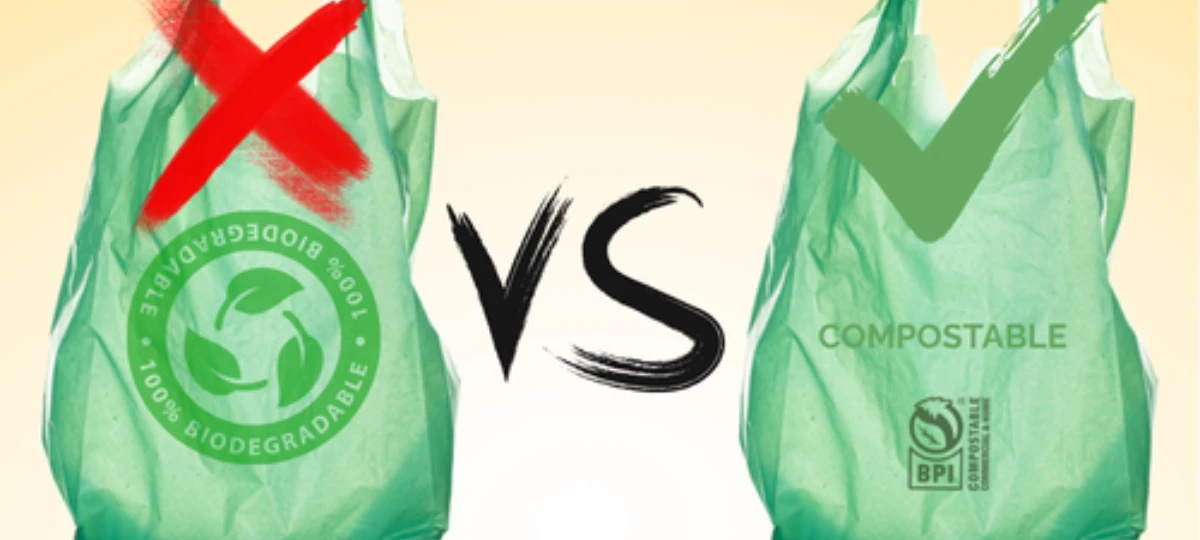
Consumers are increasingly looking for products that are better for the environment, and terms like “biodegradable” and “compostable” are often used interchangeably. While they may seem similar, there are important differences, and understanding them is essential for reducing contamination and supporting successful composting programs.
Biodegradation is the natural process by which microorganisms consume organic carbon in a material. In fact, biodegradation is one of the key performance criteria evaluated under ASTM compostability standards. From a technical standpoint, certified compostable products are biodegradable under a specific set of conditions found in composting processes.
However, the reverse is not always true.
The term “biodegradable” does not specify where or how quickly a material will be broken down into carbon dioxide, water, heat and biomass. Without a defined environment and timeframe, the claim is incomplete and can be misleading. A product marketed as biodegradable may not break down in a composting system at all, or it may take longer than the timeframe required to produce quality compost, may contain harmful toxins, such as regulated metals, and could make the resulting compost unsafe for use.
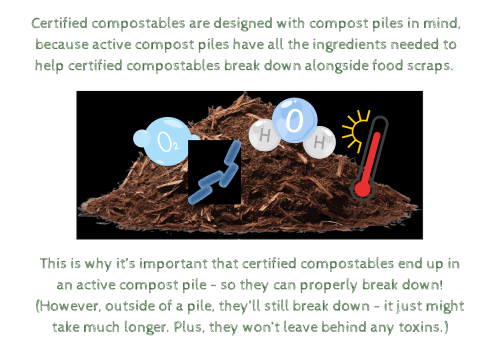
Additionally, it's important to note that the Federal Trade Commission (FTC) recognizes that biodegradability claims must be qualified. Under its Green Guides, marketers should only make a biodegradable claim when they have competent and reliable scientific evidence demonstrating that the entire product or package will completely break down and return to nature within one year after the way consumers would normally dispose of it ("customary disposal"). However, that is only a guideline and is not easily enforced.
For years, the term “biodegradable” has been used broadly in sales and marketing, often on products that are not designed for composting. Some of these products intentionally resemble certified compostable items, creating "lookalikes" that are difficult for consumers and composters to distinguish.
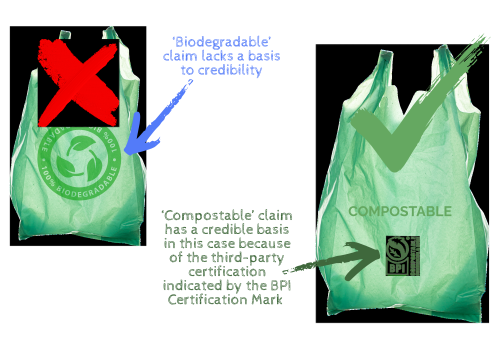
These lookalike products are a leading source of contamination at composting facilities and can undermine efforts to recover food scraps, organic waste and certified compostable products and packaging.
Because the term “biodegradable” lacks specificity and has contributed to consumer confusion, at least 5 U.S. states have made it illegal to use the term in sales and marketing claims for single-use products.
For products and packaging that meet ASTM compostability standards and are BPI Certified, “certified compostable” is the appropriate term to describe end-of-life performance.
Unlike “biodegradable,” the term “compostable” when accompanied by a 3rd party validation from BPI, communicates that a product has been tested against established pass/fail criteria and is designed to break down in an active composting environment.
Using clear and consistent language across products, packaging, and marketing materials helps consumers understand what belongs in the compost bin and helps composters maintain cleaner organics streams.
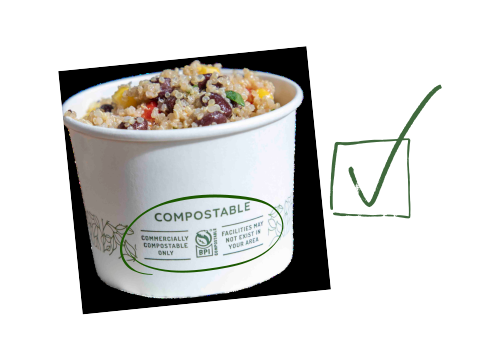
Successful composting depends on more than just product design—it depends on clear communication. Prominent use of the term “certified compostable” helps distinguish legitimate compostable products from non-compostable lookalikes and supports the production of contamination-free compost.
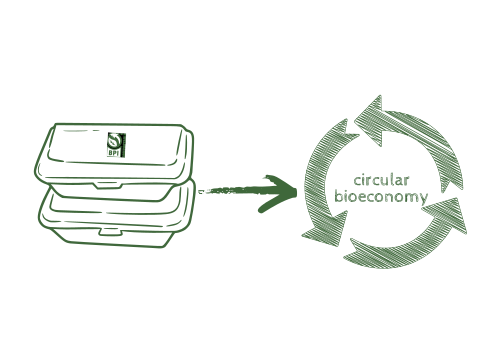
As composting infrastructure continues to grow, using the right terminology will play an important role in helping food scraps and certified compostable products complete their journey back to the soil. By choosing, promoting, and seeking out certified compostable products—and pursuing certification for products where appropriate—brands, retailers, and consumers can all help strengthen trust in compostable products and support a more circular bioeconomy.
Learn more about BPI Certification and compostability testing here.