As compostable packaging becomes more common, understanding the science behind how these materials break down and under what conditions is key to protecting compost quality and building public trust.
At BPI, compostability isn’t just a label—it’s a scientifically defined process, verified through rigorous testing and third-party review. Whether designed for industrial or backyard systems, certified compostable products must meet clear, measurable performance benchmarks that prove they truly return to the earth safely.
The term “biodegradable” is often misunderstood. It simply means a material can be broken down by microbes, without specifying how long it takes, what remains behind, or whether the result is safe for soil.
“Compostable,” by contrast, means the material:
Compostable products differ from conventional plastics because of the processes they undergo in a compost pile.
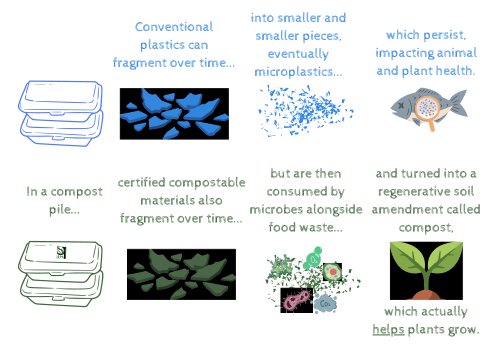
The three primary processes a compostable product undergoes in a compost pile include disintegration, biodegradation, and mineralization.
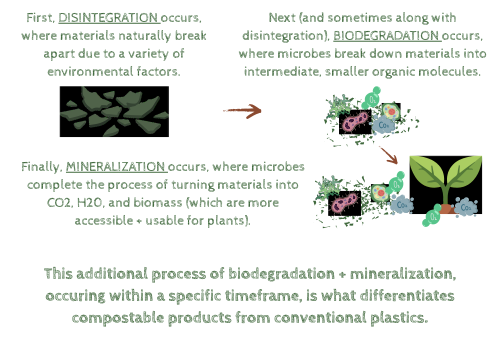
BPI Certification ensures that products meet these criteria based on the internationally recognized ASTM D6400 (for plastics) and ASTM D6868 (for coatings on paper and fiber). Certified products must pass all three scientific benchmarks:
These standards ensure that certified products perform like organic waste—not conventional plastic—within composting environments. You can learn more about the lab tests used to verify compostability here.
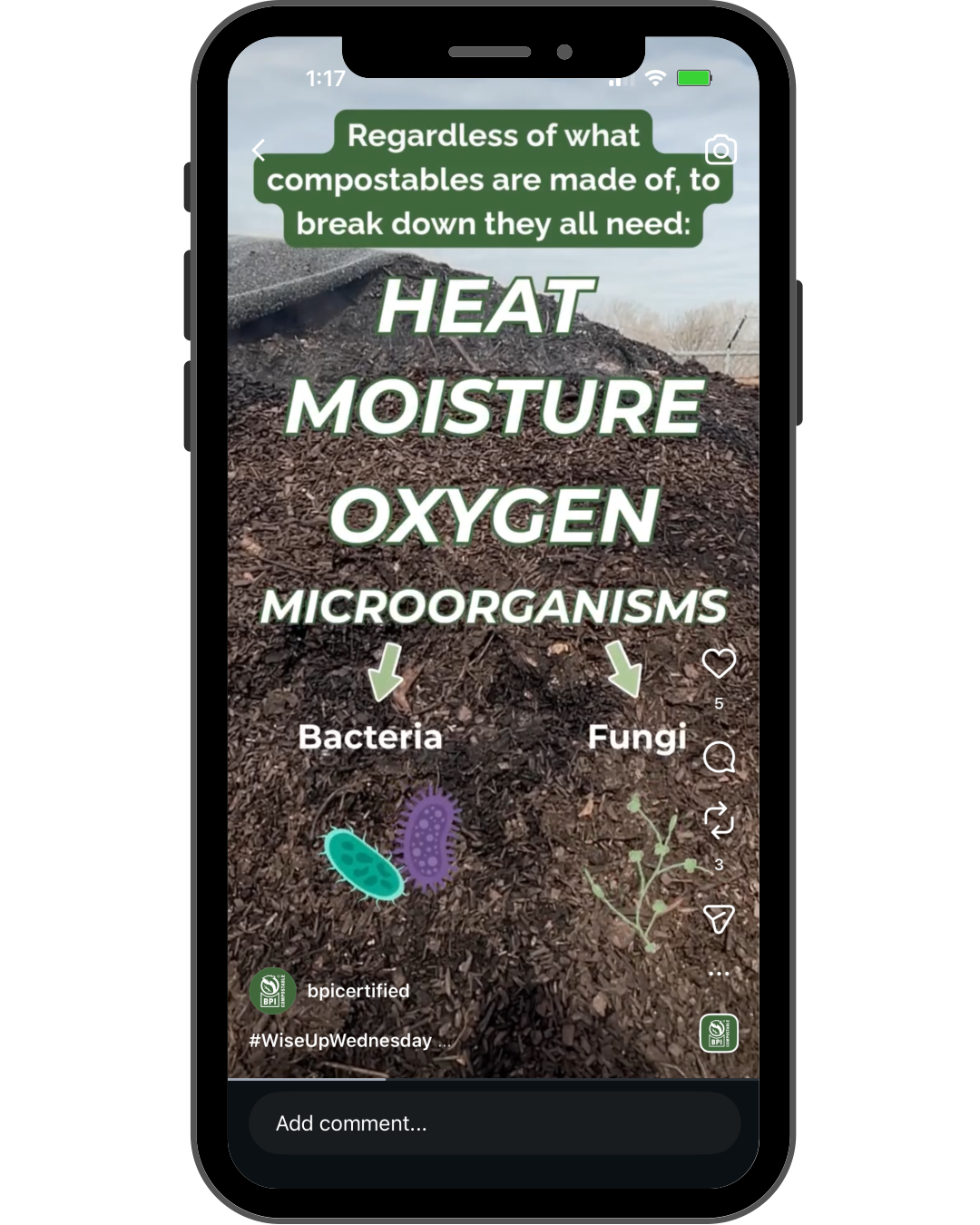
Certified compostables are designed for aerobic (oxygen-rich), thermophilic (heat-loving) environments typical of commercial composting facilities, where heat and microbial activity drive efficient degradation.
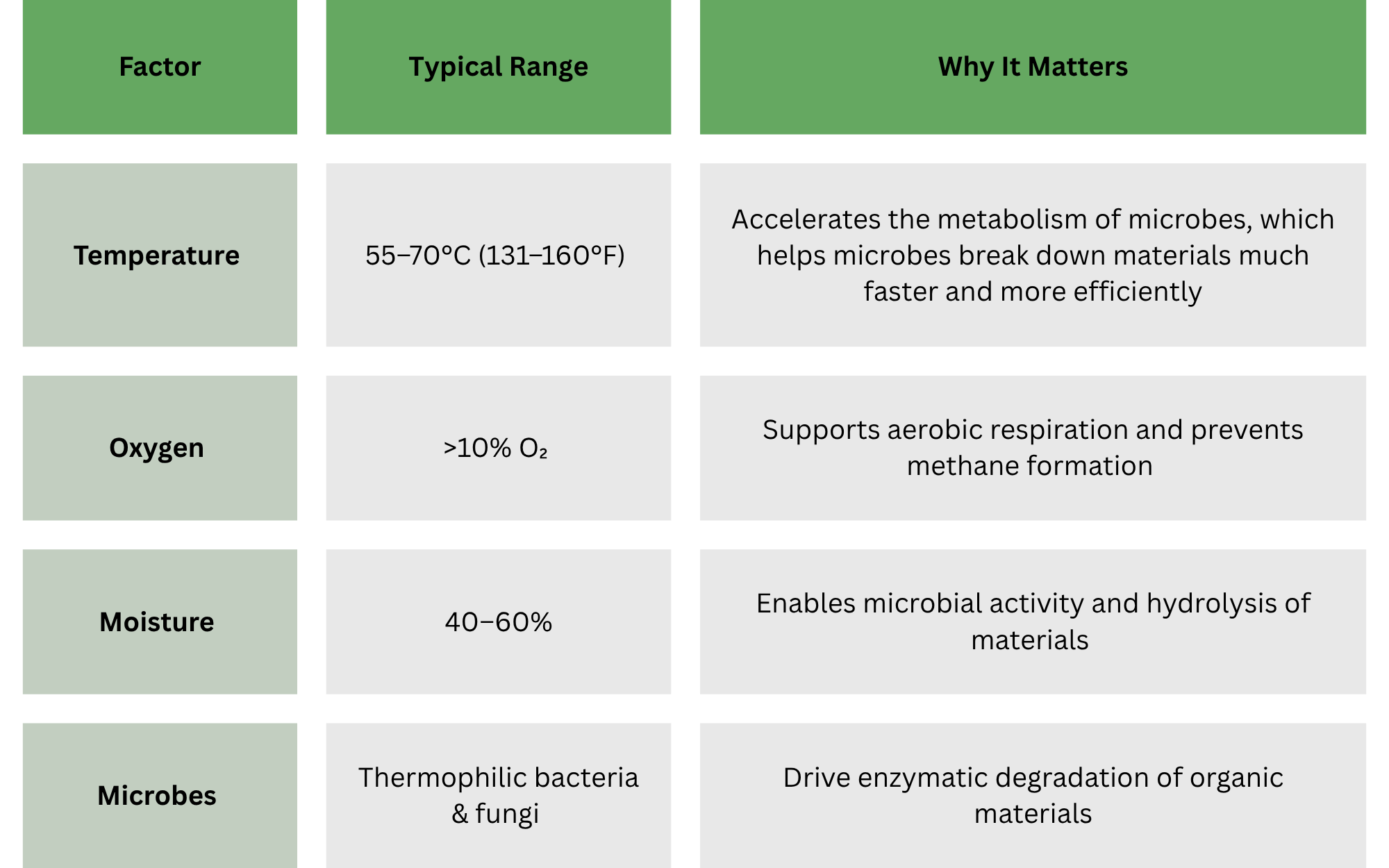
These controlled conditions allow materials such as PLA, PBAT, PHA, PCL, and PBS to fully decompose—transforming into CO₂, water, and biomass with no persistent plastic fragments.
Not all composting happens on an industrial scale. Backyard systems operate at lower temperatures and less consistent conditions than commercial facilities.
To address this difference, BPI developed the Home Compostability Certification.
In home composting, breakdown relies primarily on mesophilic microbes and ambient heat, rather than the sustained thermophilic conditions of industrial systems. That means only select materials—engineered with faster hydrolysis and biodegradation—perfomance can be certified for home composting.
By clearly labeling which products are suitable for which systems, BPI helps consumers make informed choices and prevents confusion or contamination between home and commercial composting streams.
Whether in a large-scale facility or a backyard bin, the same biological principles drive composting.
Step 1: Hydrolysis & Enzymatic Action
Moisture and microbial enzymes break down polymer chains into smaller molecules (oligomers and monomers). Certified materialsare designed to biodegradeefficiently under heat and moisture.
Step 2: Microbial Metabolism
Microbes consume these smaller molecules, converting carbon into CO₂, water, and new biomass. This marks complete biodegradation, leaving no persistent microplastics or harmful residues beind.
Step 3: Compost Maturity & Safety Testing
After the active composting phase, the finished compost is screened and tested to ensure it meets safety standards for:
Watch this Q&A with the most common questions about lab testing procedures and requirements.
The ASTM D6400 and ASTM D6868 specifications are harmonized with ISO guidelines and validated through reproducible laboratory testing.
BPI Certification adds multiple layers of accountability by requiring:
The addition of home compost certification extends this same rigor to lower-temperature systems, ensuring that certified materials perform predictably and safely wherever they’re used.
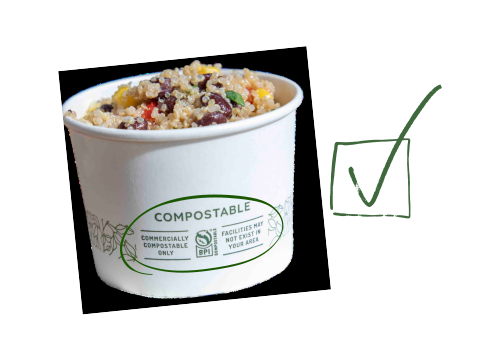
Certified compostable products are engineered to perform their intended function during use—for example, a compostable coffee cup keeps beverages hot and maintains its structure while holding liquid. After use, these products are designed to:
This is not true of uncertified “biodegradable” or “plant-based” materials, which often fragment into persistent microplastics.
By combining robust data, transparent labeling, and third-party verification, BPI Certification—both Commercial Only and Commercial and Home—ensures that compostable products truly work as intended. That’s how we protect composters, maintain soil health, and build a more trustworthy, circular organics system. Certified compostable products are designed to perform during use and then break down efficiently alongside food scraps into natural components—supporting soil health and circular systems.
Dive even deeper into how compostables break down at a molecular level in this blog: Why Some Plastics Compost and Others Don't, co-authored by Dr. Anthony Keyes of Natur-Tek.
You can also check out this short video that dives into how compostables break down in a compost pile:
"Biodegradable" only means a material can be broken down by microbes — it doesn't specify how long, what's left behind, or whether the result is safe for soil. "Compostable" is a defined standard: the material must disintegrate within a set timeframe, biodegrade into CO₂, water, and biomass, and leave behind non-toxic compost that supports soil health.
BPI Certification is based on ASTM D6400 (for plastics) and ASTM D6868 (for coatings on paper and fiber), both harmonized with ISO guidelines. Products must pass three benchmarks: disintegration, biodegradation, and eco-toxicity.
Under industrial composting conditions, certified products must reach ≥90% disintegration within 12 weeks. Home composting timelines are adjusted for the lower, more variable temperatures of backyard piles.
Only products carrying BPI's Home Compostability Certification are designed for backyard systems. Home composting relies on mesophilic microbes and ambient heat, so only select materials engineered for faster hydrolysis qualify.
Certified compostables are designed for aerobic, thermophilic environments typical of commercial composting facilities — with sustained heat, moisture, oxygen, and active microbial populations.
No. Certified products fully convert into CO₂, water, and biomass with no persistent plastic fragments. Uncertified "biodegradable" or "plant-based" materials, by contrast, often fragment into microplastics.
Three steps: (1) hydrolysis and enzymatic action break polymer chains into smaller molecules, (2) microbes metabolize those molecules into CO₂, water, and biomass, and (3) finished compost is tested for eco-toxicity, heavy metals, and disintegration.
Through third-party verification of formulation and performance, testing in accredited laboratories under simulated real-world composting conditions, and field validation in active composting systems.
PLA, PBAT, PHA, PCL, and PBS — all engineered to fully decompose into CO₂, water, and biomass under real-world composting conditions.
It protects composters, maintains soil health, and supports a circular organics system by ensuring products safely break down rather than contaminating compost streams.


